

Hey there! As a supplier of bun making machines, I often get asked about how these nifty contraptions cut the dough into bun pieces. It's a pretty cool process, and I'm stoked to break it down for you.
First off, let's talk about the basic components of a bun making machine. There are a few key parts that work together to make the magic happen. You've got the dough hopper, which is where you dump in the big mass of dough. Then there's the feeding system, which moves the dough along at a steady pace. And of course, the cutting mechanism is the star of the show when it comes to turning that big blob of dough into individual bun pieces.
The dough hopper is usually a large container that can hold a significant amount of dough. It's designed to keep the dough in place and ready to be fed into the machine. Some hoppers have agitators or mixers inside to keep the dough from settling or clumping. This ensures that the dough is evenly distributed and ready to be processed.
Once the dough is in the hopper, the feeding system takes over. This system is responsible for pushing the dough towards the cutting mechanism. It usually consists of a series of rollers or screws that work together to move the dough forward. The speed and pressure of the feeding system can be adjusted depending on the type of dough and the size of the buns you want to make.
Now, let's get to the cutting mechanism. There are a few different types of cutting mechanisms used in bun making machines, but the most common ones are the rotary cutter and the reciprocating cutter.
The rotary cutter is a circular blade that spins at a high speed. As the dough is fed towards the cutter, the blade slices through it, creating individual bun pieces. The size of the bun pieces can be adjusted by changing the speed of the cutter or the distance between the blades. Rotary cutters are known for their speed and efficiency, making them a popular choice for large-scale bun production.

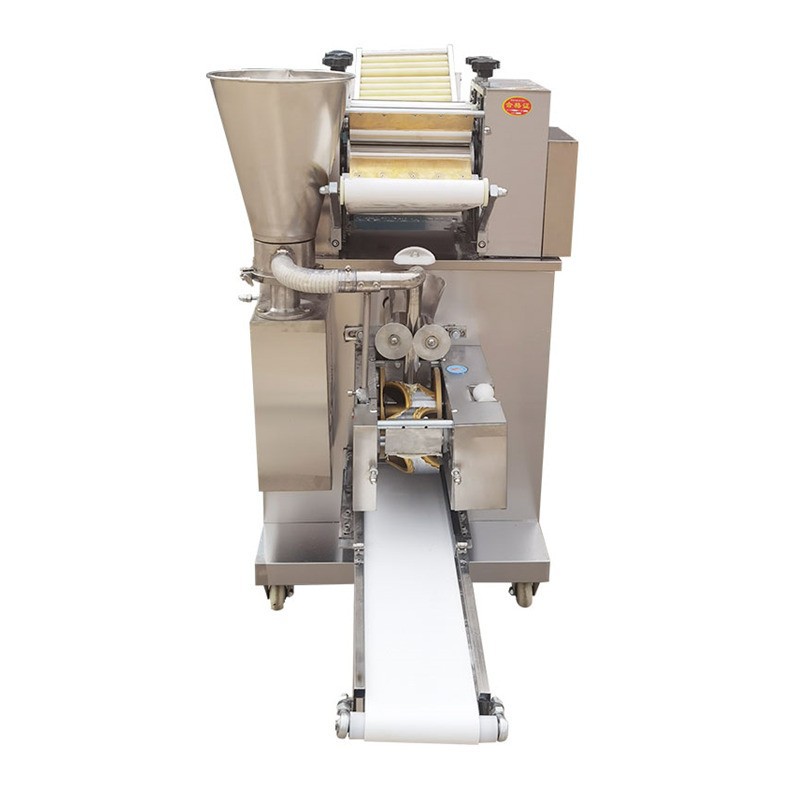
On the other hand, the reciprocating cutter moves back and forth in a straight line. It works by pushing the dough against a stationary blade, which cuts it into pieces. Reciprocating cutters are often used for smaller-scale production or for making specialty buns. They offer more control over the cutting process and can produce more precise cuts.
Another important factor in the cutting process is the dough consistency. Different types of dough have different consistencies, which can affect how easily they can be cut. For example, a soft and sticky dough may require a different cutting mechanism than a firm and dry dough. That's why it's important to choose a bun making machine that can handle the type of dough you're working with.
In addition to the cutting mechanism, some bun making machines also have additional features that can improve the quality of the bun pieces. For example, some machines have a rounding or shaping device that can give the bun pieces a more uniform shape. Others have a weighing system that can ensure that each bun piece is the same weight.
Now, let's talk about some of the benefits of using a bun making machine. First of all, it can save you a lot of time and effort. Making buns by hand can be a labor-intensive process, especially if you're making a large quantity. With a bun making machine, you can produce a large number of buns in a short amount of time.
Secondly, a bun making machine can produce more consistent results. When you make buns by hand, it can be difficult to ensure that each bun is the same size and shape. A bun making machine, on the other hand, can cut the dough into uniform pieces, resulting in more consistent buns.
Finally, using a bun making machine can improve the quality of your buns. The machine can cut the dough more precisely, which can result in better-looking and better-tasting buns. It can also reduce the risk of contamination, as the dough is handled less by human hands.
If you're in the market for a bun making machine, I'd also like to mention some other great products we offer. We have a Small Noodle Press that's perfect for making fresh noodles at home or in a small business. It's easy to use and can produce high-quality noodles in no time.
We also have an Automatic Noodle Making Machine that's designed for larger-scale production. This machine can make a variety of noodles, including udon, ramen, and spaghetti. It's a great investment for noodle manufacturers or restaurants.
And if you're interested in making dumplings, we have a High Quality Dumpling Machine that can produce delicious dumplings with ease. It can make different shapes and sizes of dumplings, and it's very efficient.
So, if you're interested in learning more about our bun making machines or any of our other products, don't hesitate to reach out. We're always happy to answer any questions you may have and help you find the right machine for your needs. Whether you're a small bakery or a large food processing plant, we've got the equipment to help you succeed.
References
- Food Processing Machinery Handbook. Publisher: ABC Publishing. Year: 2022.
- Industrial Baking Equipment: Principles and Practices. Author: John Smith. Publisher: XYZ Press. Year: 2021.