

Meat Processing Machinery
Company Profile
Established in 2002, Xingtai Jiayang Machinery Manufacturing Co., Ltd is a professional manufacturer and exporter that is concerned with the design, development and production of food machinery. We are located in Renze district, Xingtai city, Hebei province, with convenient transportation access.
Quality Control
It can be widely used in food processing plants, meat processing plants, vegetable processing plants, schools, companies and other canteens, large supermarkets, restaurants and other places.
Production Market
Our well-equipped facilities and quality control throughout all stages of production enables us to guarantee total customer satisfaction.
Rich Experience
As a result of our high quality products and outstanding customer service, we have gained a global sales network reaching USA, UK, France, Italy, Australia etc.
Our Service
We have more than 20 years of experience, whether it is pre-sale, sale, or after-sales mainly to show customers with pictures or videos of machine operation. Video is intuitive, so don't worry that you will be able to operate it. Machine warranty one year, lifetime maintenance.
-
![Frozen Meat Dice Cutting Machine]() Frozen Meat Dice Cutting MachineThe machine is non-wearing, using special cutting tools to cut bones, no meat crushing, degree of protection of your interests, automatic, manual operation, reduce the labor intensity of workers,...read more
Frozen Meat Dice Cutting MachineThe machine is non-wearing, using special cutting tools to cut bones, no meat crushing, degree of protection of your interests, automatic, manual operation, reduce the labor intensity of workers,...read more -
![Cooked Meat Slice Cutting Machine]() Cooked Meat Slice Cutting MachineThis is a multiple cooked meat slicer, it can cut almost all vegetables and cooked meat without bones and slightly frozen or fresh meat. Cooked meat, such as: ham, sausage, bacon, cooked beef...read more
Cooked Meat Slice Cutting MachineThis is a multiple cooked meat slicer, it can cut almost all vegetables and cooked meat without bones and slightly frozen or fresh meat. Cooked meat, such as: ham, sausage, bacon, cooked beef...read more -
![Three-dimensional Dicing Machine]() Three-dimensional Dicing MachineVoltage: 220v/380vread more
Three-dimensional Dicing MachineVoltage: 220v/380vread more
Power: 750kw
Capacity: 600kg/h
Weight: 100kg
Dice of cutting: customized -
![Meat Bowl Cutter Mixer Machine]() Meat Bowl Cutter Mixer MachineChopping machine (cutter mixer) is a kind of food processing equipment, widely used in meat, vegetables, seafood and other food chopping processing. This machine can quickly chop the ingredients,...read more
Meat Bowl Cutter Mixer MachineChopping machine (cutter mixer) is a kind of food processing equipment, widely used in meat, vegetables, seafood and other food chopping processing. This machine can quickly chop the ingredients,...read more -
![China 125L Bowl Chopper Meat Chopper Factory]() China 125L Bowl Chopper Meat Chopper FactoryConstructed entirely from stainless steel, this 125L commercial bowl chopper is designed for the precision processing of meat pastes and minced meat. Capable of handling both fresh and semi-frozen...read more
China 125L Bowl Chopper Meat Chopper FactoryConstructed entirely from stainless steel, this 125L commercial bowl chopper is designed for the precision processing of meat pastes and minced meat. Capable of handling both fresh and semi-frozen...read more -
![Industrial Pork Chicken Meat Dicer Machine Commercial Frozen Meat Cube Cutting Machine Cutter Automatic Meat Slicer Machine]() Industrial Pork Chicken Meat Dicer Machine Commercial Fro...This machine suitable for cutting frozen pork ribs, frozen streaky pork, and frozen half-chickens/half-ducks into pre-set sizes in one passread more
Industrial Pork Chicken Meat Dicer Machine Commercial Fro...This machine suitable for cutting frozen pork ribs, frozen streaky pork, and frozen half-chickens/half-ducks into pre-set sizes in one passread more -
![Chicken Nugget Machine]() Chicken Nugget MachineChicken chop machineThe chicken nugget machine is an automated device specifically designed for cutting chicken, duck, pork ribs and other bone-in meats.read more
Chicken Nugget MachineChicken chop machineThe chicken nugget machine is an automated device specifically designed for cutting chicken, duck, pork ribs and other bone-in meats.read more -
![Industrial Frozen Meat And Vegetable Dicing Machine]() Industrial Frozen Meat And Vegetable Dicing MachineMachine introduction Frozen meat and vegetable dicing machine is an efficient food processing machine, which is mainly used to cut various ingredients into uniform dicing shapes quickly and...read more
Industrial Frozen Meat And Vegetable Dicing MachineMachine introduction Frozen meat and vegetable dicing machine is an efficient food processing machine, which is mainly used to cut various ingredients into uniform dicing shapes quickly and...read more -
![Commercial Fresh Chicken Cutting Machine]() Commercial Fresh Chicken Cutting MachineFresh chicken cutting machine product introduction Fresh chicken cutting machine is a kind of automatic mechanical equipment used to cut whole chicken, duck and other poultry meat into chunks. The...read more
Commercial Fresh Chicken Cutting MachineFresh chicken cutting machine product introduction Fresh chicken cutting machine is a kind of automatic mechanical equipment used to cut whole chicken, duck and other poultry meat into chunks. The...read more -
![Bone Saw Machine]() Bone Saw MachineBone sawing machines play a key role in the field of food processing and can be divided into desktop, vertical and commercial multi-stage bone sawing machines by type. Table bone sawing machine is...read more
Bone Saw MachineBone sawing machines play a key role in the field of food processing and can be divided into desktop, vertical and commercial multi-stage bone sawing machines by type. Table bone sawing machine is...read more -
![Sashimi Slicer Machine]() Sashimi Slicer MachineDiagonal filleting machine is a kind of automatic equipment specially used to cut fish into diagonal slices, which is widely used in food processing industry. With sharp blades and precise...read more
Sashimi Slicer MachineDiagonal filleting machine is a kind of automatic equipment specially used to cut fish into diagonal slices, which is widely used in food processing industry. With sharp blades and precise...read more -
![Parallel Fresh Meat Slicer]() Parallel Fresh Meat SlicerFresh meat parallel slicing machine introduction 1. Conveyor belt stripe, large friction, smooth transportation, easy cleaning, can cut out even thin meat slices 2. The blade is made of...read more
Parallel Fresh Meat SlicerFresh meat parallel slicing machine introduction 1. Conveyor belt stripe, large friction, smooth transportation, easy cleaning, can cut out even thin meat slices 2. The blade is made of...read more


Meat processing machinery is mostly made of stainless steel and other high-quality built-in parts, which ensure long life-span of industrial Meat processing machinery.
These machines are manufactured with highly advanced techniques and user-friendly features, which make it useful for people in different ways for meat processing. These machines are helpful to perform various operations such as mixing, tumbling, chopping, comminuting, salting curing, cutting, fermentation, drying, heat treatment and much more. The meat processing machines are useful to decrease harmful bacteria and make ready to meat for human consumption. In modern days, the Meat processing machinery can be mechanized easily.
Benefits of eat Processing Machinery
Customized equipment improves productivity
Meat processing machinery suppliers can design customized processing equipment and production lines based on the specific needs of food companies. Compared with ordinary equipment, customized equipment can better match the company's process flow, eliminate bottlenecks, and expand productivity. For example, automated meat slicing and portioning equipment can greatly increase output and efficiency.
More precise process control
Professional meat processing machinery suppliers can provide food companies with solutions for automated and precise process control. This includes automatic weighing, feeding, seasoning, and cooking equipment. Precise process control ensures consistent product quality.
Higher operational stability
The solutions provided by meat processing machinery suppliers consider optimizing the reliability and availability of the equipment in terms of design and deployment. They can provide preventive maintenance, operator training, key spare parts supply to minimize downtime failures as much as possible. This ensures stable production operations.
Excellent cleaning performance
Excellent meat processing machinery has outstanding cleaning performance, such as hygienic design, anti-corrosion materials, high-pressure cleaning functions, etc. This greatly reduces the difficulty of cleaning and ensures food safety and sanitation standards.
Type of Meat Processing Machinery
'lt is awesome to work with Creative. amazingy organized,easy to communicate with. responsive with next iterations,and beautiful work.
Grinder
The heart of meat processing
Your grinder is the essential tool for processing meat in your facility. It is the heart of the operation, responsible for breaking down the meat into the desired consistency for various products. Key points to know about grinders include:
Grinders are crucial for transforming raw meat into ground meat for burgers, sausages, and more.
Different grinder sizes are available, allowing you to choose one that fits your production needs.
Sausage stuffer
Enhancing productivity and efficiency
A sausage stuffer is a crucial machine in meat processing facilities, allowing for higher productivity and efficiency in sausage production. It simplifies the process of filling casings with ground meat mixture, ensuring uniformity and speed. The stuffer’s design enables workers to streamline their tasks, reducing manual labor and optimizing output.
Meat slicer
Precision in cutting for quality products
A meat slicer provides precise cutting for high-quality meat products. It ensures uniform slices, enhancing the presentation and taste of the meat. This machine is crucial for meat processing facilities as it speeds up the slicing process and maintains consistency in thickness. An efficient meat slicer contributes to minimizing waste and maximizing the yield of meat products.
Vacuum sealer
Extending shelf life and maintaining freshness
Vacuum sealers are essential for meat processing facilities. They help extend the shelf life of meat products, keeping them fresh for a longer time. By removing air and sealing the package tightly, vacuum sealers prevent spoilage and maintain the quality of the meat. This process also helps in preserving the flavors and nutrients of the meat, ensuring that it stays delicious and safe to consume.
A lot of people do not inevitably think about the procedure that falls out in order to bring the food they purchase, even meat products. These very meat products follow through meat processing machinery prior to ending up in the food market –and food processing plants are heavy operations. Here you must fulfill particular safety and handling requisites adjusted by the FDA and USDA, and they need an exceptional processing plant that is meat processing machinery to function. Here is what you had better recognize about this meat processing machinery and the plant and equipment that get in them.
Meat processing is the action that makes up the functions and steps in creating processed meat productions expeditiously, safely, and hygienically. The meat processing machinery process includes the assorted type of nutrient of animal origin, which is more healthful for human food. The very meat processing is the mixture of an across-the-board variety of ways that lets in chemicals and physicals handlings methods. All engineering’s included in this very meat processing are chopping up, mixing, and cutting down, tumbling, grinding, curing, salting, drying out, fermenting, heat treatment, nonmeat additives, or zests, stuffing into shells or different containers, and a few others. Today, most of the meat processing machinery can be handled easily. In that respect, different meat processing machines do diverse operations of meat production, suchlike grinding, softening, tenderizing, and slicing up.

How Meat Processing Machines Work
Cutting and Slicing
Meat slicers and cutters employ high-speed blades and precision controls to cut meat into uniform slices or portions. These machines can adjust cutting parameters, such as thickness and size, to meet specific requirements, ensuring consistency in product appearance and quality.
Grinding and Mixing
Meat grinders and mixers automate the process of grinding meat and blending ingredients to create various products such as sausages, burgers, and meatballs. These machines use powerful motors and integrated mixing systems to achieve uniform texture and flavor profiles, reducing the need for manual labor and minimizing production time.
Packaging and Labeling
Packaging machines streamline the packaging process by efficiently wrapping, sealing, and labeling meat products. These machines can handle a wide range of packaging materials, including vacuum-sealed bags, trays, and casings, ensur ing product freshness and compliance with labeling regulations.
Meat is prepared and processed in multiple stages. The journey starts with carcasses from the slaughterhouse of cattle, pigs, sheep, poultry and other livestock. It finishes with consumer-ready products which have undergone various processes, from simple cutting and portioning to more extensive grinding, mixing and forming treatments. Meat processing also produces by-products such as hides, feathers, dried blood, rendered fat and bone meal.
Skinning machines
Skinning machines are designed for the efficient removal of skin, membrane and rind. They should maximise the meat yield from a carcass and remove any unwanted fragments of skin and membrane. Thoroughly skinned meats have significantly more consumer appeal than roughly or incompletely skinned products, and the benefit of top quality machinery is that they can deliver products which meet consumer demands.
Deboning machines
Deboning equipment is generally designed around the shape of specific types of meat, and for different joints. Deboning involves gripping the meat, cutting it away from the bone, and conveying the meat to the next stage of processing. Recovered bones and collagen are usually processed in a separate operation and used for meat by-products such as animal feeds and fertilisers, as well as mechanically recovered meat (MRM) products for human consumption.
Deboners are available for all parts of poultry, including thighs, drumsticks, wings and the removal of breasts. Pork and lamb deboners are used for the removal of the aitch bone (the back of the hip) and on shoulders and legs. After whole carcasses are sectioned into four parts by a cutting machine, beef quarters are ready for butchering by hand or machinery. Deboning machinery is used to free up the meat from different parts of the beef quarter, ready to be portioned into the various cuts and joints seen in butchers’ shops and on supermarket shelves.
Cutting meat machines
Meat needs to be cut as part of the deboning process, to allow the removal of bones from different parts of the animal. Machine cutting is usually based on a system of stainless steel blades (knives or band saws) which are easily cleaned to meet hygiene requirements.
Cutting or trimming equipment is often integrated with deboning equipment as part of the meat processing flow. Cutting is normally performed by a system of stainless steel blades (knives or saws) which are easily cleaned to meet hygiene requirements.
Meat cutting machines are also designed to slice and dice portions of raw, unprocessed meat as well as processed meats such as hams, salamis and other types of charcuterie.
Meat processing equipment
Raw meat is transformed into many different types of processed products including mince,
sausages, hams, bacon, corned beef, canned meats, dried meat, pastes and charcuterie. Restructured meat is produced by chopping or flaking meat, blending it with other meat and non-meat products such as flavourings and preservatives, and forming it into shapes. Some restructured meat products such as ham can resemble natural shapes, while others such as burgers and sausages do not.

Meat Processing refers to the various stages and techniques involved in the preparation of meat products for consumption. Meat processing machinery refers to a wide range of machines, tools, and equipment used for various stages of processing, handling, packaging, and storing different types of meat products. This includes equipment used for slaughtering, cutting, grinding, mixing, seasoning, and cooking meat, as well as machines used for packaging and labeling meat products.
The types of Meat processing machinery can vary depending on the type of meat product being produced and the specific needs of the processing plant.
Meat processing machinery is used by meat processing plants, butcher shops, and other businesses involved in the production and distribution of meat products. It plays a critical role in ensuring food safety, product quality, and efficient production processes.
After slaughtering, the meat is typically cut into various sizes and shapes using cutting and grinding equipment. It is then mixed with various ingredients to create different flavors and textures, such as spices, herbs, and seasonings. The meat products are then cooked using various cooking equipment such as ovens, smokers, and grills.
Meat processing machinery plays a critical role in ensuring food safety, product quality, and efficient production processes. Once the meat products are cooked and prepared, they are packaged and labeled for distribution to retailers and consumers. Meat processing plays a critical role in ensuring food safety, product quality, and efficient production processes in the meat industry.
How to Maintenance And Maintenance of Meat Processing Machinery?
First of all, using manufacturer must according to the instructions provided by the equipment manufacturer, according to the normal operation, not allowed to have rough operation behavior, does not allow is beyond the scope of the machine used for, such as meat grinder with its ground of livestock and poultry bones can't;
Again after work every day to timely cleaning equipment, oil and water when cleaning according to the directions of wanders into place, must not let water machine main body with strong water flushing, lest cause short circuit, danger; At 80 ℃ warm water and detergent cleaning do not contain fluorescent agent. Machinery gear, shaft parts, clean with edible oil or butter lubrication, in order to reduce wear and tear, increasing the equipment service life. Machinery and equipment can be unloaded parts can be used in a flume 80 ℃ warm water and detergent to clean. In order to avoid leakage, burning device; Do not disassemble it to again.
Finally, electronic platform scale equipment regular maintenance and calibration to please the manufacturer. Electronic platform scales, electronic said when weighing, do not exceed the scope of its weighing, cotton print head will often use alcohol to wipe. Cutter knife should be used when no polishing, after reoccupy whetstone sharpening, after washed with warm water and detergent in the glove box, in preparation for the next day.
Have the specialist is responsible for equipment, equipment, personnel operations. Machinery and equipment in the process of operation, such as some accidents happen to cut off the power supply as soon as possible, turn off the switch. Machinery and equipment cannot be taken apart, want to have a professional presence may remove the maintenance. Workshop contact processed products equipment, instruments should be used in chemical properties of stability, non-toxic, tasteless, corrosion resistance, no rust, easy cleaning and disinfection, smooth surface and adsorption, solid materials, shall not use bamboo instruments and cotton and linen products.
All contain meat and aquatic products quick-frozen convenient food processing machine equipment design and construction should be able to prevent the harm of food hygiene, easy cleaning and disinfection, As far as possible, easy to remove) And easy to check and maintenance, and will not cause harm. Should use can prevent the lubricating oil and metal debris, sewage or other substances that may cause pollution into the structure of food. Must often wash mechanical power device, should use waterproof type, waterproof type wire contact applications.
Food contact surfaces shall be smooth, no dents or cracks, in order to reduce food debris, dirt, and the accumulation of organic matter, microbial growth to a minimum extent. Food contact surfaces, in principle, do not use woodiness data, unless it can prove that does not become a pollution source before use. Processing equipment installation position should be according to the technological process of reasonable arrangement, prevent cross contamination occurs during processing, easy to maintenance and cleaning and sanitation. Heating facilities shall conform to the requirements of the hot working process, preparation conforms to the requirements of the thermometer, pressure gauge.
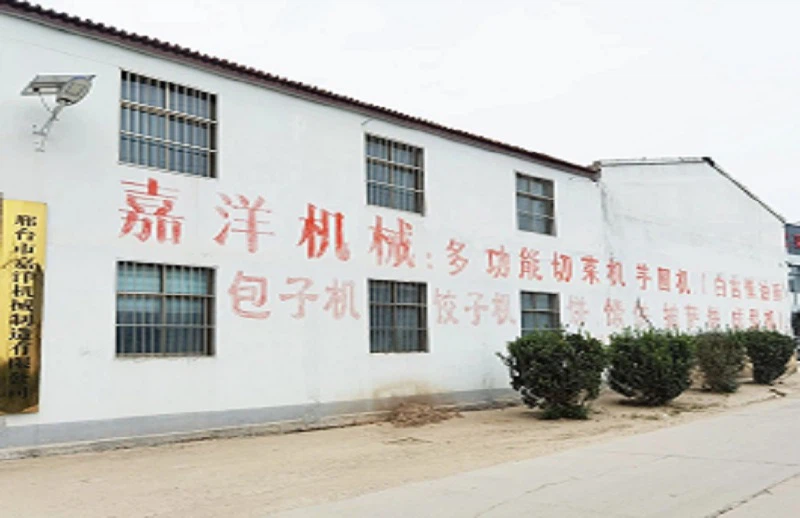
Our Factory
Established in 2002, Xingtai Jiayang Machinery Manufacturing Co., Ltd is a professional manufacturer and exporter that is concerned with the design, development and production of food machinery.


Our Certificate


FAQ
We're professional meat processing machinery manufacturers and suppliers in China. Please feel free to buy high quality meat processing machinery at competitive price from our factory. Contact us for more details.
automatic meat slicer, tomato mango cube cutting machine, forzen meat cutting machine