

Vegetable Processing Machinery
Company Profile
Established in 2002, Xingtai Jiayang Machinery Manufacturing Co., Ltd is a professional manufacturer and exporter that is concerned with the design, development and production of food machinery. We are located in Renze district, Xingtai city, Hebei province, with convenient transportation access.
Quality Control
It can be widely used in food processing plants, meat processing plants, vegetable processing plants, schools, companies and other canteens, large supermarkets, restaurants and other places.
Production Market
Our well-equipped facilities and quality control throughout all stages of production enables us to guarantee total customer satisfaction.
Rich Experience
As a result of our high quality products and outstanding customer service, we have gained a global sales network reaching USA, UK, France, Italy, Australia etc.
Our Service
We have more than 20 years of experience, whether it is pre-sale, sale, or after-sales mainly to show customers with pictures or videos of machine operation. Video is intuitive, so don't worry that you will be able to operate it. Machine warranty one year, lifetime maintenance.
-
![Bulb Vegetable Cutter]() Bulb Vegetable CutterThis bulb vegetable cutting machine is specially designed for root vegetables. One machine, three knives, three shape. By changing different knives. It can cut vegetables to slice, dice and shred.read more
Bulb Vegetable CutterThis bulb vegetable cutting machine is specially designed for root vegetables. One machine, three knives, three shape. By changing different knives. It can cut vegetables to slice, dice and shred.read more -
![Double Vegetable Cutter]() Double Vegetable CutterMultifunction Vegetable Cutting Cutter Slicer Dicing Machine is specially designed to segment various stem and leafy vegetables. And by change different knives can cut various root and stem...read more
Double Vegetable CutterMultifunction Vegetable Cutting Cutter Slicer Dicing Machine is specially designed to segment various stem and leafy vegetables. And by change different knives can cut various root and stem...read more -
![Potato Push Strip Machine]() Potato Push Strip MachineIt is a multifunctional automatic melon and fruit cutting machine, saving time and effort, improving work quality, complete cutting tools, meeting various needs, thickened stainless steel body,...read more
Potato Push Strip MachineIt is a multifunctional automatic melon and fruit cutting machine, saving time and effort, improving work quality, complete cutting tools, meeting various needs, thickened stainless steel body,...read more -
![Coconut Husk Shredder Machine Dry Coconut Husk Chips Cutter For Fruit & Vegetable Use]() Coconut Husk Shredder Machine Dry Coconut Husk Chips Cutt...The coconut shell dicing machine is mainly used for shredding and dicing coconut shells to facilitate subsequent processing and utilization. For example, it can be used for preprocessing raw...read more
Coconut Husk Shredder Machine Dry Coconut Husk Chips Cutt...The coconut shell dicing machine is mainly used for shredding and dicing coconut shells to facilitate subsequent processing and utilization. For example, it can be used for preprocessing raw...read more -
![Vertical Fruit And Vegetable Peeler]() Vertical Fruit And Vegetable PeelerMelon and fruit peeler is an efficient and convenient equipment, specially used to remove the outer skin of melons and fruits, thereby improving the processing speed and quality, and reducing...read more
Vertical Fruit And Vegetable PeelerMelon and fruit peeler is an efficient and convenient equipment, specially used to remove the outer skin of melons and fruits, thereby improving the processing speed and quality, and reducing...read more -
![Fruit And Vegetable Washing And Peeling Machine]() Fruit And Vegetable Washing And Peeling MachinePotato peeling machine is a kind of mechanical equipment for potato peeling and washing, using the mutual friction between potatoes and potatoes, potatoes and brush or abrasives, the potato skin...read more
Fruit And Vegetable Washing And Peeling MachinePotato peeling machine is a kind of mechanical equipment for potato peeling and washing, using the mutual friction between potatoes and potatoes, potatoes and brush or abrasives, the potato skin...read more -
![Single Head Vegetable Cutter]() Single Head Vegetable CutterA single-ended vegetable cutter is a food processing device specifically designed to handle a single type of ingredient. It is usually suitable for cutting roots, leafy vegetables, melons and...read more
Single Head Vegetable CutterA single-ended vegetable cutter is a food processing device specifically designed to handle a single type of ingredient. It is usually suitable for cutting roots, leafy vegetables, melons and...read more -
![Stainless Steel Potato Shoving Machine]() Stainless Steel Potato Shoving MachinePotato pushing machine is a special for cutting potatoes and other root vegetables into strips of food processing equipment, the fuselage adopts stainless steel structure, corrosion resistance,...read more
Stainless Steel Potato Shoving MachinePotato pushing machine is a special for cutting potatoes and other root vegetables into strips of food processing equipment, the fuselage adopts stainless steel structure, corrosion resistance,...read more -
![Potato Washing And Peeling Machine]() Potato Washing And Peeling MachineThe potato washing and peeling machine is an intelligent root vegetable washing and peeling machine. The peeling machine runs smoothly, has a compact structure, beautiful appearance, and is more...read more
Potato Washing And Peeling MachineThe potato washing and peeling machine is an intelligent root vegetable washing and peeling machine. The peeling machine runs smoothly, has a compact structure, beautiful appearance, and is more...read more -
![High Quality Vegetable Slicer]() High Quality Vegetable SlicerMulti-functional vegetable cutting machine, suitable for all kinds of vegetables. It can cut stem and leaf soft vegetables and slender hard vegetables to slice or segment or chopped, such as: leek...read more
High Quality Vegetable SlicerMulti-functional vegetable cutting machine, suitable for all kinds of vegetables. It can cut stem and leaf soft vegetables and slender hard vegetables to slice or segment or chopped, such as: leek...read more -
![Potato Washing and Peeling Machine]() Potato Washing and Peeling MachinePotato cleaning and peeling function can effectively remove more than 95% of the sediment and impurities on the surface of the potato, and the peeling rate can usually reach 85%-98%. The fine...read more
Potato Washing and Peeling MachinePotato cleaning and peeling function can effectively remove more than 95% of the sediment and impurities on the surface of the potato, and the peeling rate can usually reach 85%-98%. The fine...read more -
![Fruit and Vegetable Cut Article Machine]() Fruit and Vegetable Cut Article MachineMultifunction Vegetable Cutting Cutter Slicer Dicing Machine is specially designed to segment various stem and leafy vegetables. And by change different knives can cut various root and stem...read more
Fruit and Vegetable Cut Article MachineMultifunction Vegetable Cutting Cutter Slicer Dicing Machine is specially designed to segment various stem and leafy vegetables. And by change different knives can cut various root and stem...read more


The key to a well-designed Vegetable Processing Machine is that it must be able to run for as many months as feasible throughout the year. This means that the facilities, buildings, material handling, and equipment must all be properly interconnected and coordinated to handle as many products as possible at the same time, while the equipment must also be versatile enough to handle a variety of products without major modifications.
A typical processing centre or factory should process four or five different varieties of vegetables collected at various periods throughout the year. Dried finished goods, juices, pickles, tomato juice, ketchup and paste, jams, jellies and marmalades, and semi-processed fruit products must all be handled by the vegetable processing machine.
Benefits of Vegetable Processing Machinery
Increased Efficiency and Productivity:
Vegetable processing machines are designed to handle large volumes of vegetables quickly and efficiently. These vegetable processing line are equipped with various automated features, including sorting, washing, peeling, cutting, slicing, and packaging, which significantly reduce manual labor and increase productivity. By automating repetitive tasks, these machines save time, increase production capacity, and enable businesses to meet consumer demands effectively.
Improved Food Safety and Quality:
Food safety and quality are of utmost importance in the food industry. vegetable processing machines ensure hygienic handling and processing of vegetables, minimizing the risk of contamination and ensuring consistent quality. These machines are made from food-grade materials and incorporate features such as water jets, air drying systems, and sanitization processes to maintain cleanliness throughout the processing cycle.
Waste Reduction:
Vegetable processing often generates a significant amount of waste, including peels, trimmings, and scraps. Vegetable processing machines can minimize waste by optimizing the use of raw materials. They are designed to extract maximum edible portions while reducing the amount of discarded waste. Some machines also have integrated waste management systems, such as composting or recycling options, further contributing to sustainable practices.
Cost Savings:
Although the initial investment in industrial vegetable processing machines can be substantial, they can lead to long-term cost savings. By streamlining operations, reducing manual labor, and minimizing waste, these machines improve overall efficiency and lower production costs. Additionally, the increased productivity and consistent quality provided by these machines contribute to improved profitability and a competitive edge in the market.
Types of Machinery Used in Vegetable Processing Machinery
Washing and Cleaning Machines: These machines are used to remove dirt, debris, and other contaminants from fruits and vegetables. They may use water, brushes, or air to clean the produce thoroughly.
Cutting and Slicing Machines: These machines are used to cut fruits and vegetables into various shapes and sizes, such as slices, cubes, or julienne strips. They can be manual, semi-automatic, or fully automatic.
Peeling Machines: Peeling machines are used to remove the outer skin or peel of fruits and vegetables efficiently. They help in saving time and labor compared to manual peeling.
Juicing Machines: Juicing machines extract juice from fruits and vegetables, separating the liquid from the pulp and other solids. They can be used for both commercial and domestic purposes.
Dehydrators: Dehydrators remove moisture from fruits and vegetables, preserving them for longer periods. They are commonly used to produce dried fruits and vegetables.
Packaging Machinery: Packaging machinery is used to pack processed fruits and vegetables into containers, bags, or other packaging materials. This equipment ensures product safety and extends shelf life.
The skill of using fruit and vegetable processing machinery holds immense significance in a wide range of occupations and industries. In the food processing industry, this skill enables professionals to efficiently transform raw fruits and vegetables into various processed products such as juices, purees, canned goods, frozen items, and more. It also plays a crucial role in ensuring the quality, safety, and nutritional value of these products.
Moreover, mastering this skill opens doors to careers in agriculture, as individuals with expertise in fruit and vegetable processing machinery can assist farmers in efficiently handling and preserving their harvests. Additionally, professionals working in the nutrition and health industries can leverage this skill to develop innovative and nutritious food products for consumers.
By honing this skill, individuals can positively influence their career growth and success. They become sought-after candidates in industries that rely on fruit and vegetable processing machinery, allowing them to secure rewarding positions and explore various opportunities for advancement. Furthermore, possessing this skill demonstrates adaptability and versatility, making individuals valuable assets in an ever-evolving job market.
Fruit and vegetable processing machinery finds practical application across diverse careers and scenarios. For example, in a juice manufacturing company, professionals skilled in this area operate machinery to extract and process fruits into fresh juices with optimal taste and nutritional content. In large-scale food processing plants, individuals proficient in using this machinery oversee the production of canned vegetables, frozen fruits, and other processed products.
First, all vegetables to be washed are put into the sink. Under the action of high-pressure water flow and bubbles, they are fully broken up, rolled, washed and conveyed. The mud and sand on the surface of the vegetables will fall off and settle in the isolation bin at the bottom, preventing re-contamination caused by reflux. The debris and small insects washed off the vegetables will float on the water surface and then be collected by the mesh. The water overflowing the sink is discharged from the water tank and enters the nylon bag. After the vegetables are washed by the vegetable processing machine, they are sprayed and then sent out through the conveyor belt. There is a blowing device at the end of the conveyor belt to blow off the debris that has not been cleaned.
When the vegetable processing machine is working, the ozone generator produces ozone, which is transported to the washing barrel of the vegetable washing machine through the ozone pipe by the ozone pump. In the washing barrel, it comes into contact with the water machine and dissolves in the water to form ozone water. Ozone water has strong bactericidal, disinfecting and pesticide degradation effects. It uses different cleaning processes and cleaning modes, which may change the water consumption. Choosing the right vegetable washing machine equipment is also one of the important factors. It purifies, disinfects and sterilizes vegetables and food: degrades residual pesticides and other toxic substances in vegetables and fruits from the outside to the inside, and removes antibiotics, chemical additives, hormones, heavy metal ions and other harmful substances in meat and seafood.

How To Choose The Right Vegetable Processing Machinery For Your Food Business
Selecting suitable vegetable processing machinery can be a game-changer for any food business. It not only boosts efficiency but also ensures the consistent quality of your product. However, with numerous options available in the market, making the right choice can be a daunting task.
Assessing your business needs
When it comes to selecting the ideal vegetable processing equipment for your food business, the first step is undoubtedly understanding your specific requirements. Not all food businesses are the same. Hence the machinery requirements also vary significantly.
Maybe your product quality heavily relies on the sorting, blanching, cooling, dehydration, or efficient freezing of fruits and vegetables. And let’s not forget the packaging and product sorting process, which is integral to maintaining the reputation of your brand.
By evaluating these facets of your business, you can better identify what type of machinery will efficiently cater to your needs. Remember, the right machinery should complement your business processes, not complicate them.
Prioritising ease of operation and maintenance
The importance of user-friendly vegetable processing machinery cannot be overstated. A complicated or difficult-to-operate machine can result in lower productivity, increased errors, and frustrated staff. Therefore, it is crucial to opt for machinery that is designed with an intuitive interface and straightforward operation.
Furthermore, regular maintenance is key to ensuring the longevity and optimum performance of your equipment. Choose machinery that requires minimal upkeep and parts that can be easily replaced or repaired. High-quality food processing machinery is not only robust and efficient but also designed for easy operation and low maintenance, which makes them an ideal choice for high-volume production activities.
Embracing the future with GEM
Choosing GEM for your vegetable processing machinery needs signifies an investment in the future of your food business. We strive to pioneer innovations that enhance your productivity and ensure you stay ahead in the competitive food industry. With GEM’s reliable and efficient vegetable processing machinery, your pursuit of consistent quality and operational excellence is within reach.
Vegetable Processing Machinery Process
According to the characteristics of different materials, the step of cleaning and peeling can be carried out in different ways. Root vegetables can be peeled using a brush cleaning and peeling machine. For example, fruits such as jujube do not need to be peeled, so it only needs a fruit and vegetable washing machine to clean.
Multifunctional vegetable cutting machine or down-pressure fruit and vegetable slicer can complete the slicing work of fruits and vegetables.
Blanching can effectively prevent the activity of enzymes in fruits and vegetables and has great benefits for maintaining the unique fresh color of fruits and vegetables. This step can be selected according to customer needs.
Vegetables after blanching need to be dehydrated with a dehydrator to remove the excess water on the surface of fruits and vegetables
The fruit and vegetable dryer can dry the moisture contained in the fruit and vegetable according to the requirements. The machine can set the time and temperature of the entire drying process on the control panel.
The fruit and vegetable mill grinds the dried fruits and vegetables. The fineness of the powder is controlled by the mesh of the sieve plate.
The powder sieving machine screens the powder of different fineness, it can sieve the powder into 2, 3, 4, and other different grades.
If different packaging methods are used for the powder, then different styles of packaging machines can be selected. The packaged powder is easy to store and circulate.
Maintaining a vegetable processing machine is essential for ensuring its longevity and efficiency. These machines play a crucial role in the food industry, helping to prepare and process fruits and vegetables quickly and effectively. Regular maintenance not only extends the life of the equipment but also ensures that the quality of the processed produce remains high.
Regular Cleaning and Sanitation
One of the most important aspects of maintaining a vegetable processing machine is regular cleaning and sanitation. These machines often come into contact with various types of produce, which can leave behind residues and bacteria. To prevent contamination and ensure the machine operates smoothly, it is crucial to clean it thoroughly after each use.
Daily Cleaning Routine
After each processing session, disassemble the machine and clean all removable parts with warm, soapy water. Use a brush to scrub away any stubborn residues. Rinse all parts thoroughly and allow them to air dry before reassembling the machine.
Weekly Deep Cleaning
In addition to daily cleaning, perform a deep cleaning of the machine once a week. This involves using a food-safe sanitizer to disinfect all surfaces and components. Pay special attention to areas that are difficult to reach during daily cleaning. This will help to eliminate any bacteria or mold that may have accumulated over time.
Lubrication and Mechanical Maintenance
To keep your vegetable processing machine running smoothly, it is essential to regularly lubricate its moving parts. Proper lubrication reduces friction and wear, extending the life of the machine's components.
Regular Inspection
Perform regular inspections of the machine to identify any signs of wear or damage. Check for loose or worn-out parts and replace them as needed. This proactive approach can prevent more significant issues from developing and ensure that the machine operates efficiently.
Calibration and Adjustment
Over time, the settings on your vegetable processing machine may shift, affecting its performance. Regular calibration and adjustment are necessary to maintain optimal processing conditions.
Checking Calibration
Periodically check the calibration of the machine to ensure that it is operating within the specified parameters. This may involve measuring the thickness of slices, the size of cuts, or the speed of processing. Adjust the settings as needed to maintain consistency and quality.
Adjusting Blades and Cutting Mechanisms
The blades and cutting mechanisms of the machine are critical components that require regular attention. Ensure that the blades are sharp and properly aligned. Dull or misaligned blades can result in uneven cuts and reduced efficiency. Replace or sharpen blades as necessary to maintain optimal performance.
Electrical and Safety Checks
Ensuring the electrical components and safety features of your vegetable processing machine are in good working order is vital for both performance and safety.
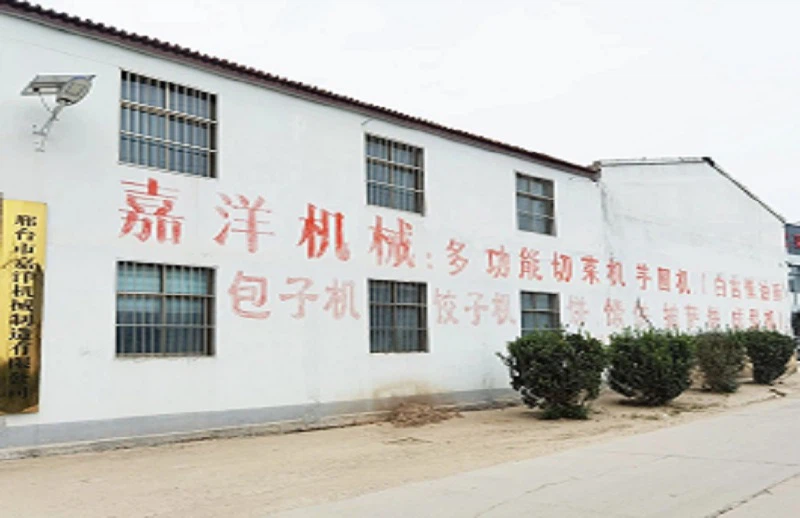
Our Factory
Established in 2002, Xingtai Jiayang Machinery Manufacturing Co., Ltd is a professional manufacturer and exporter that is concerned with the design, development and production of food machinery.


Our Certificate


FAQ
We're professional vegetable processing machinery manufacturers and suppliers in China. Please feel free to buy high quality vegetable processing machinery at competitive price from our factory. Contact us for more details.
vegetable shredding dicing slicing cutting machine, vegetable processing machinery, single head vegetable cutter commercial vegetable carrot cutter